

Supporting Women Judges: Wellbeing and Safe Workplaces



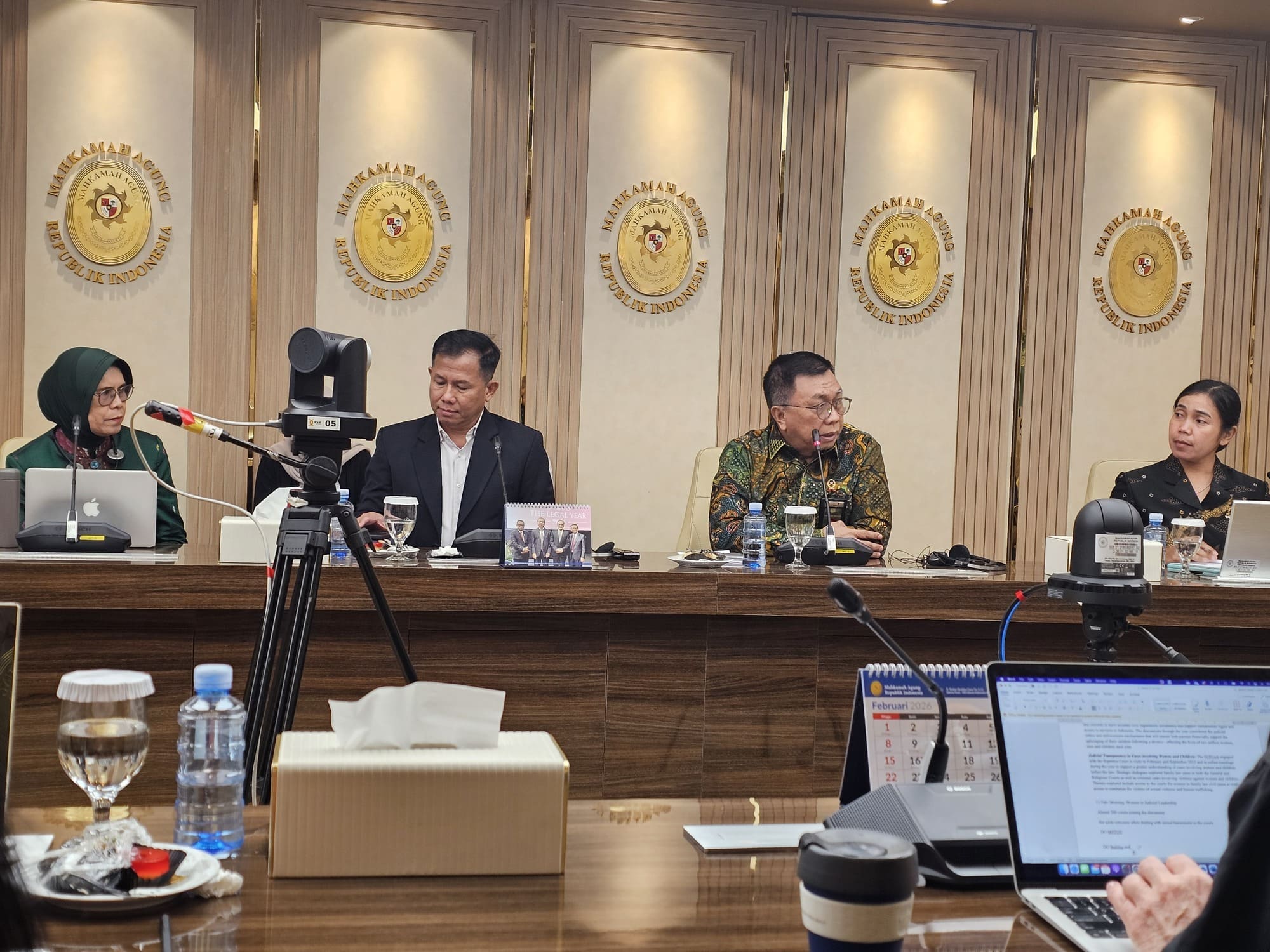
Being a judge in Indonesia is demanding work, and for women judges, it often comes with the dual challenge of balancing professional duties with family life. Judges are regularly promoted and/or transferred to different cities, which can force women judges to choose between career or staying close to families.
Hon. Justice Nani Indrawati, Chairperson of the Indonesia Women Judges Association (BPHPI), put it clearly, “Saying ‘it is ‘your risk for being a judge — take it or leave it’ undermines women’s right to choose and advance. Judicial institutions should ensure women judges can work closer to their families and within a reasonable transportation budget.”
Director General of the Religious Court and Director General of Military and Administrative Courts shared their support for the discussion.
Mental Health Support: Lessons from Australia
BPHPI and FCFCOA acknowledged the Nauru Declaration on Judicial Wellbeing and agreed that a healthy, supported judge makes better decisions for the wellbeing of the public. Judges work can be emotionally heavy as they frequently deal with difficult cases involving children and families in crisis circumstances. Hon. Justice Boyle shared how the FCFCOA supports the mental health of its judges and judicial staff. Key practices from Australia include:
- Free, confidential counselling for all judges.
- Mandatory counselling sessions four times a year for judges and court staff in Victoria’s Magistrates Courts to prevent burnout from dealing with traumatic cases.