

The Importance of Monitoring Policy for Women and Children Involved in Closed Trials



The tagline of “no viral, no justice” reflects growing public frustration over unequal law enforcement and the perception that justice is only served when cases go viral. This underscores the importance of ensuring that all legal processes — whether public or closed — are conducted objectively and fairly, particularly when they involve women and children.
As an external judicial oversight body, the Judicial Commission plays a crucial role in preventive supervision of trials to safeguard the rights of vulnerable groups. Internally, the Supreme Court also is responsible for trial oversight through Supreme Court Regulation Number 3 of 2017 on the Guidelines for Adjudicating Cases of Women in Conflict with the Law. On 26 February 2025, the Supreme Court issued Letter No. 7/TUAKA.WAS/PW1.4/II/2025, which formally permits the Judicial Commission to directly monitor both open and closed trials.
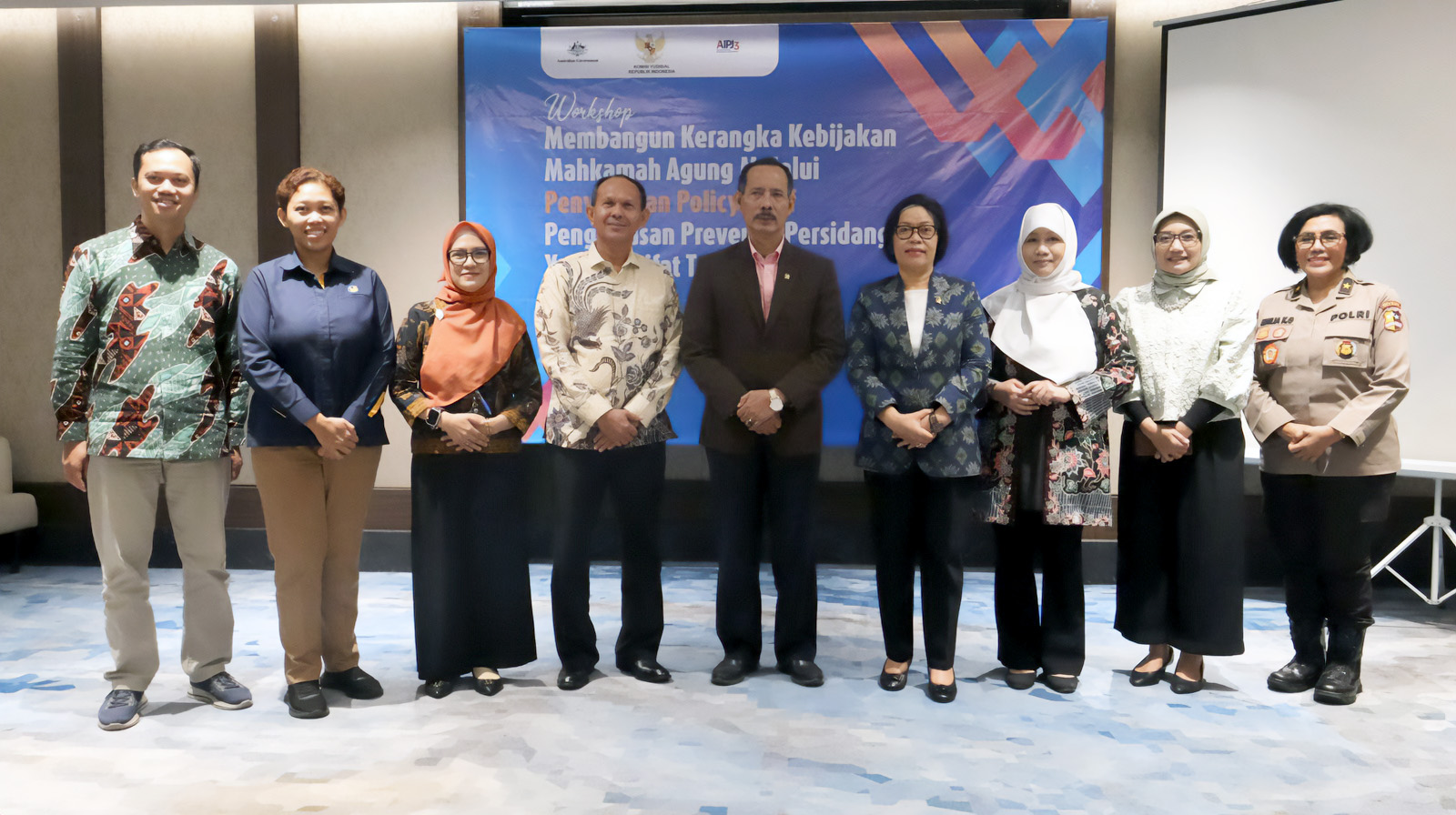
“Monitoring trials is not intended to interfere with judges or find flaws in the trial process, but to ensure proceedings follow the procedural law and the Code of Ethics and Guidelines for Judicial Conduct,” explained Judicial Commission member Joko Sasmito during the opening of the workshop held on 8 October 2025 in Jakarta.
Throughout 2025, the Judicial Commission conducted 70 monitoring sessions of closed trials in cases involving violence against women and children. However, access to some closed sessions remained limited due to differing interpretations among judges.
“Monitoring closed trials involving women and children in conflict with the law is crucial for the Judicial Commission in order to guarantee their rights before the law,” emphasized Sukma Violetta, a Judicial Commission Commissioner.
Supported by AIPJ3, the Judicial Commission conducted a series of workshops and discussions with civil society observers of closed courts in East Java, East Nusa Tenggara, and East Kalimantan from August to November 2025.
The Judicial Commission also encouraged the Supreme Court to issue a stronger internal policy to ensure the Judicial Commission’s access to monitor closed trials involving women and children. This is expected to lead to an agreement between two institutions.