

Supporting Victim Recovery and Protection through Restitution and Protection Orders



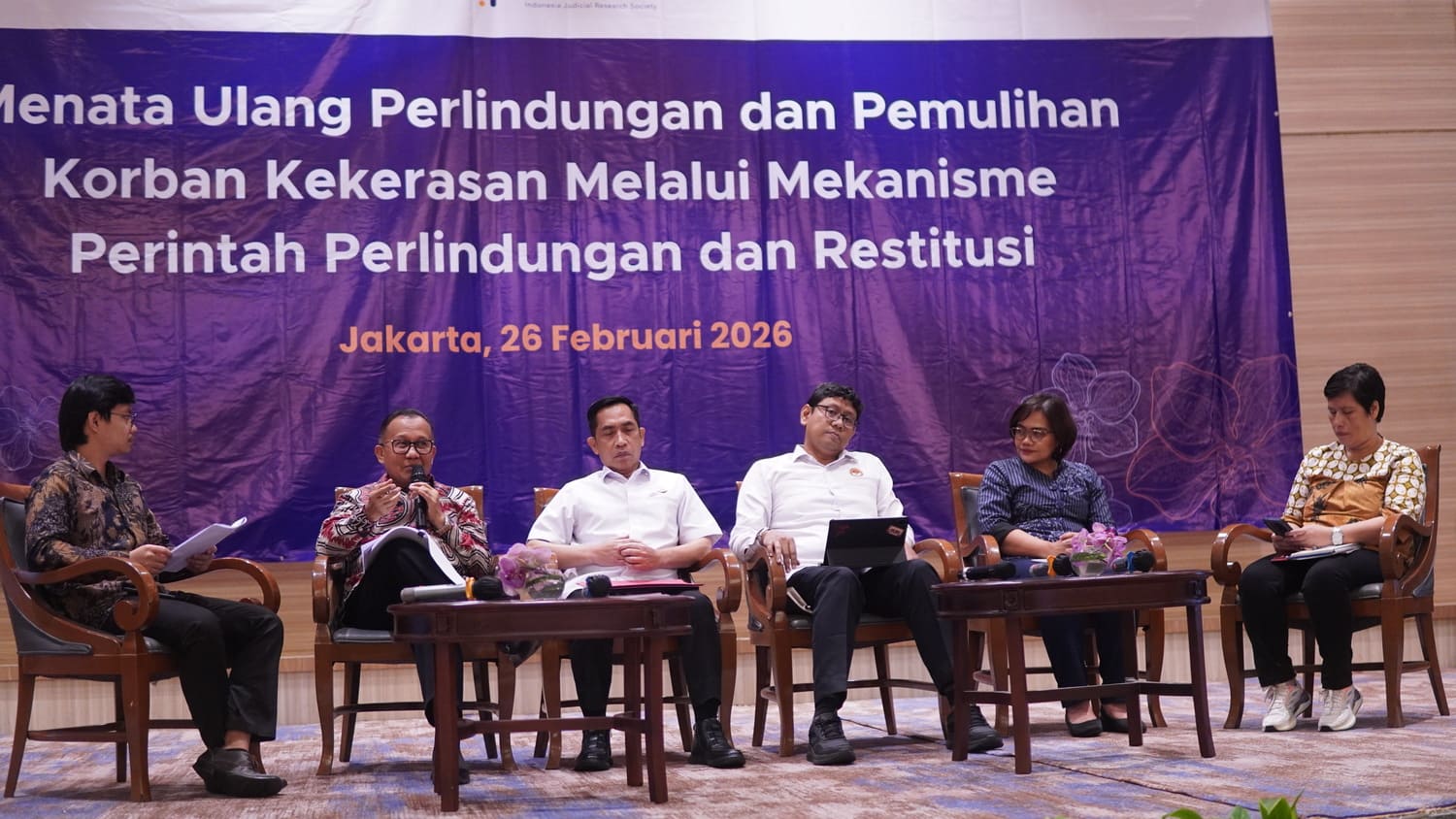
The impact of crime extends far beyond the incident itself. Victims of violence often face ongoing burdens such as medical expenses, loss of income, psychological trauma, and social or cultural stigma. This reality highlights the need for victim-centered policy reforms that respond to their lived experiences. These issues were the focus of a research dissemination event hosted by the Indonesia Judicial Research Society (IJRS), with support from AIPJ3, on Thursday, 26 February 2026 in Jakarta.
During the event, IJRS presented its research findings through two panel discussions on restitution and protection orders, two mechanisms considered essential for ensuring both recovery and safety for victims of violence.
Restitution requires perpetrators to support a victim’s recovery by compensating for the harm and losses caused by a criminal act. IJRS research shows that, despite restitution being recognized across various Indonesian laws and regulations, its implementation remains extremely limited. Of the 1,459 court decisions reviewed, only four included restitution orders, highlighting a significant gap between legal provisions and actual practice.
Throughout the panel discussion on restitution, IJRS researchers emphasized that harmonizing existing regulations would enable judges and prosecutors to apply restitution more consistently. Law enforcement officials also stressed the importance of cross-sector coordination, from investigation through to enforcement, to ensure that victims’ rights to restitution are fulfilled more effectively. One of the discussants, Supreme Court Justice Dr. Achmad Setyo Pudjoharsoyo, S.H., M.H., underscored this point, stating, “Addressing violence cannot stop at punishing the perpetrator. Victims must be placed at the center of case handling through effective protection and meaningful recovery.”
Public awareness was also highlighted as a key factor in strengthening victim protection and recovery. Syahrial Martanto Wiryawan from the Witness and Victim Protection Agency (LPSK) emphasized the importance of outreach and accessible legal assistance. “Many victims are still unaware that they have the right to request restitution when they experience a criminal act. Strengthening awareness and support for victims is therefore crucial,” he noted.
In the panel session on protection orders, IJRS reiterated that comprehensive victim support must include not only recovery, but also protection as a core pillar of victim safety and well‐being. Protection orders enable the state to provide immediate protection without waiting for a court to determine the perpetrator’s guilt, allowing for swift intervention to prevent further harm.
However, IJRS research found that implementation of protection orders also remains limited. A key challenge is the absence of clear technical guidelines, which creates uncertainty for law enforcement officers in the field. As highlighted during the discussion, while the Domestic Violence Law (UU PKDRT) and the Sexual Violence Law (UU TPKS) formally recognize protection orders, further technical regulations are needed to ensure these mechanisms are implemented effectively and deliver meaningful benefits to victims.
Read also: AIPJ3 Bulletin 4th Edition | March 2026